







In the bustling hospitality landscape of Nigeria—from Lagos’s high-end boutique hotels to sprawling resorts in Abuja and Port Harcourt—security is no longer just a luxury; it is a license to operate.
Gone are the days when a lone security guard with a flashlight and a logbook sufficed. Today, sophisticated threats, internal theft, and fire hazards demand a smarter response. This is where integrated security systems for hotels in Nigeria come into play. By unifying CCTV, access control, and intrusion detection onto a single platform, hotel owners can protect their assets while delivering a seamless experience for guests.
The Current Security Landscape in Nigerian Hospitality
Nigerian hotels face unique challenges. From “one-chance” incidents in parking lots to internal collusion with staff and the ever-present risk of electrical fires, the threats are varied. Traditional siloed systems (separate cameras, standalone locks, and manual fire alarms) often fail when a real crisis hits. They create blind spots and slow down reaction times.
Integration solves this. When your security ecosystem talks to itself, your security team stops chasing shadows and starts preventing incidents.
Core Components of an Integrated System
For a hotel in Lagos or Kano, an integrated system isn’t just about cameras. It is a network of interdependent technologies:
1. AI-Powered CCTV & Video Analytics
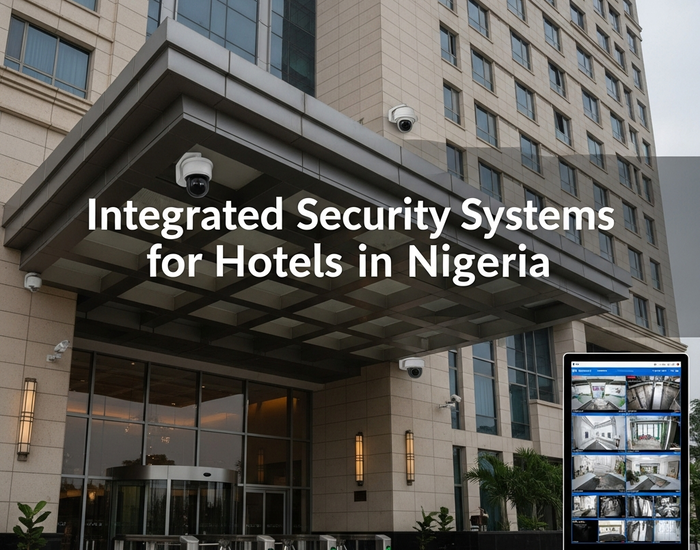
Modern IP cameras do more than record. They can detect a person loitering near a service elevator at 2 AM, recognize a license plate in the VIP zone, or count the number of guests entering the breakfast buffet. When integrated, these cameras trigger specific responses (e.g., locking a nearby door or alerting a supervisor’s smartphone).
2. Smart Access Control (RFID/Mobile)
Replace mechanical keys with biometric or RFID card readers. Integration allows you to instantly deactivate a lost key card from the front desk or restrict a housekeeper’s access to only the floors they are assigned to. For Nigerian hotels, this drastically reduces internal theft.
3. Fire & Intrusion Detection
Smoke detectors and motion sensors should not work in isolation. In an integrated system, if a fire alarm activates on the third floor, the system can automatically:
– Unlock emergency exits.
– Switch stairwell lights to maximum brightness.
– Send a real-time alert to the nearest fire station in Ikeja.
Why Integration is a Game-Changer for Nigerian Hotels
1. Enhanced Guest Privacy and Trust
Guests are wary of hidden cameras or intrusive checks. An integrated system uses “privacy masking” on cameras in corridors and pools while maintaining coverage. When a guest reports a missing laptop, you don’t need to watch 48 hours of footage; you search by time and zone in seconds. This builds five-star reviews on platforms like Jumia Travel or Booking.com.
2. Reduction of Internal Theft
According to industry estimates, internal theft accounts for a significant percentage of hotel losses in Nigeria. With integrated access control, you know exactly which staff member entered a storage room at a specific time. Overlaying that data with CCTV footage provides irrefutable evidence, deterring dishonest employees.
3. Operational Efficiency
A single security guard managing one monitor cannot watch 50 cameras effectively. Integrated systems use “exception-based monitoring”—the system only alerts human guards when something unusual occurs. This frees up staff to focus on customer service rather than staring at screens.
4. Lower Insurance Premiums
Insurance companies in Nigeria are now asking for proof of robust security. Presenting a certificate of an integrated fire and intrusion system (meeting NPF or SON standards) often reduces liability premiums.
Challenges and Solutions for Nigerian Deployment
Challenge: Unstable power grids and internet connectivity.
Solution: Modern integrated systems come with redundant power backups (UPS/solar compatibility) and edge recording (cameras store footage locally if the NVR loses connection). Choose systems with 4G/LTE failover for remote monitoring.
Challenge: High upfront cost.
Solution: View integration as an ROI tool. A single prevented burglary or avoided lawsuit pays for the system. Many Nigerian integrators now offer phased deployment—start with CCTV + access control, then add fire and analytics later.
How to Choose the Right Integrator in Nigeria
Not every “CCTV installer” can handle integration. Look for partners certified by global brands (Hikvision, Dahua, Honeywell, Axis) with a physical office in Lagos, Abuja, or Port Harcourt. Ask for case studies of hotels they have secured. Ensure they offer remote maintenance and 24/7 technical support.
The Future is Unified
As Nigeria moves toward a digital economy, smart hotels will outperform traditional ones. An integrated security system for hotels in Nigeria is not just about catching thieves; it is about creating an environment where guests sleep soundly, staff work efficiently, and management sleeps peacefully.
Whether you run a 20-room guesthouse in Enugu or a 200-room chain in Victoria Island, integration is the standard you cannot afford to ignore.
Ready to upgrade? Contact a certified security integrator today to audit your current setup and build a unified system that scales with your business.